The Mobile Coffee Group
Watch as a story
Tap either side to skip, hold to pause, or expand for a bigger view. Arrow keys work too.
Food trucks
A full commercial cook-line — griddle, gas burners, extraction hood — built in behind the same espresso bar as our coffee vans. For operators running a menu, not just a machine.
See the gallery How it's built
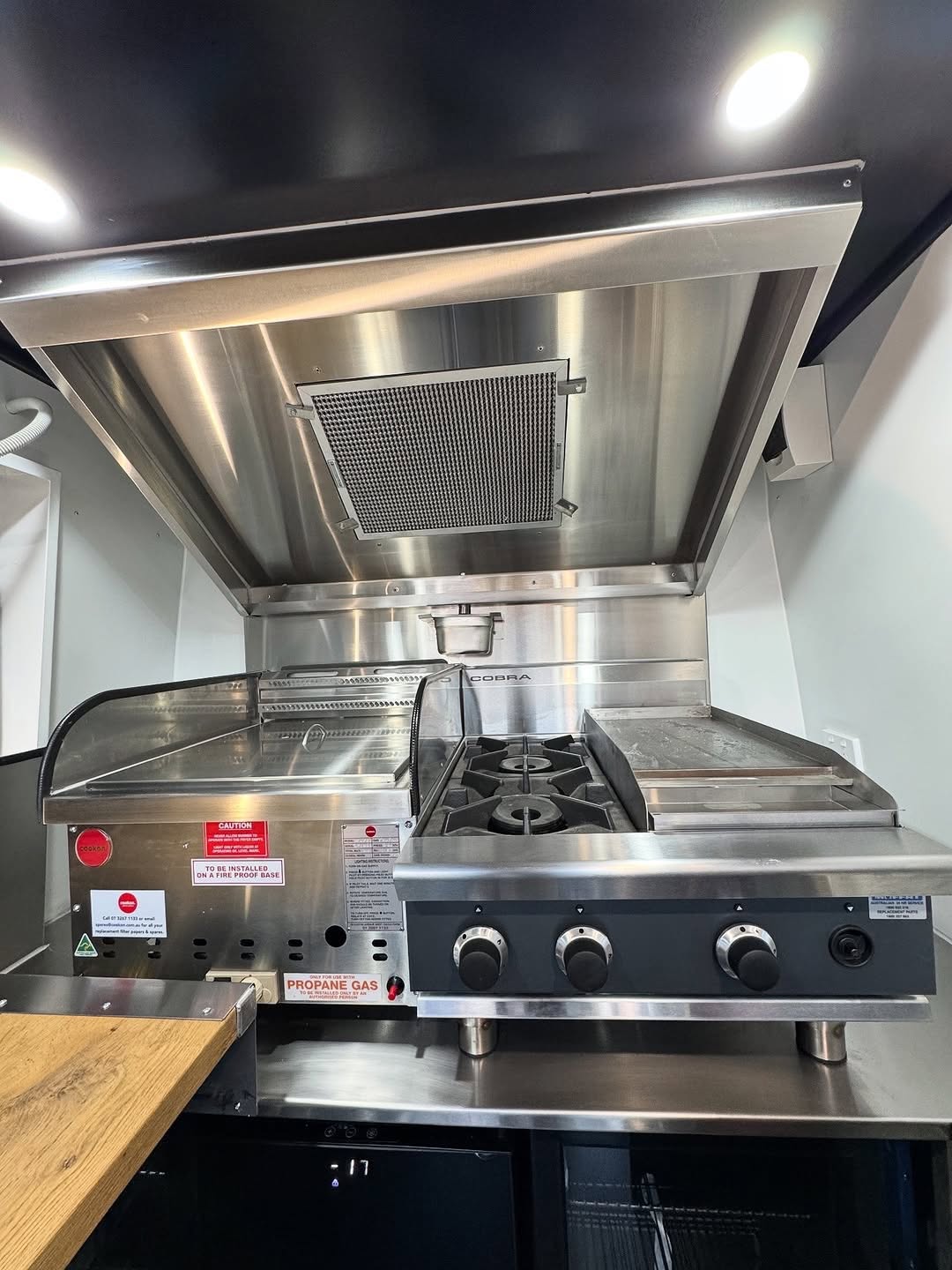
Cook-line detail, machine installs and finished builds — click through the clips in the main window, or pick one from the strip below.
The Mobile Coffee Group
Watch as a story
Tap either side to skip, hold to pause, or expand for a bigger view. Arrow keys work too.
Trucks we fit out
A cook-line adds weight, heat and gas that an espresso-only build never has to deal with. We're looking for four things before anything else: GVM headroom, floor space for two work zones, roof access for extraction ducting, and a chassis rated to carry it all.
LDV G10 and Deliver 9, Renault Master, Mercedes Sprinter, Iveco Daily and box-body trucks — anything with the GVM headroom to carry a griddle, cooktop, extraction hood and full espresso bar without pushing past its rating.
Coffee bar at the front, cook-line behind it. That split needs enough floor length to keep the barista and the cook working without crossing paths mid-service.
A commercial hood over a griddle or grill has to vent somewhere. We're checking the roof can take a ducted extraction fan before the cook-line layout gets locked in.
Propane cooktops and griddles mean a compliant gas system: bottle mounting, isolation valves, and signage the same as any commercial kitchen — built in, not bolted on after.
Unlined, no existing plumbing or gas runs. A clean shell means the cook-line and the espresso bar both go exactly where the layout calls for them.
Brand-new from a bare shell, or an existing van or truck stripped back and re-fitted with a full kitchen — both routes end at the same compliance sign-off.
Build your own
Everything a coffee van has, plus a genuine cook-line built in behind it. The cook-line adds one real extra decision — extraction — that a coffee-only build never has to make.
Espresso bar near the servery for fast hand-off, cook-line further back where the heat and the gas bottles sit. Overhead cabinetry and a servery window keep the front-of-house stock within reach without crossing into the cook's space.
A commercial griddle and multi-burner propane cooktop set into a stainless bench, with a canopy hood ducted straight through the roof. Gas bottles, isolation valves and compliance signage are built to the same standard as a fixed commercial kitchen.
Two-group machines are installed, either gas or inverter/battery powered. Paired grinders sit alongside, and the power choice follows the work — gas for long days away from a plug, inverter and battery where a quiet, flueless set-up matters.
A wash and rinse sink for the cook-line, a separate hand-wash point, and fresh and waste tanks sized up for kitchen use rather than coffee alone — all specced to food-safety requirements before the truck goes on the road.
A dual-battery or lithium bank with inverter runs the fridge, lighting and espresso gear through a full trading day. Cooking runs on propane rather than the battery bank, so the two loads don't compete for the same power budget.
The cook-line and the espresso bar build the same way underneath, whatever the exterior finish ends up being — a full wrap, a solid colour, or minimal signage on a plain body.
Your nearest dealer can walk you through cook-line options, extraction, and what it takes to get one built on your timeline.