The Mobile Coffee Group
Watch as a story
Tap either side to skip, hold to pause, or expand for a bigger view. Arrow keys work too.
Piaggio Ape coffee vans
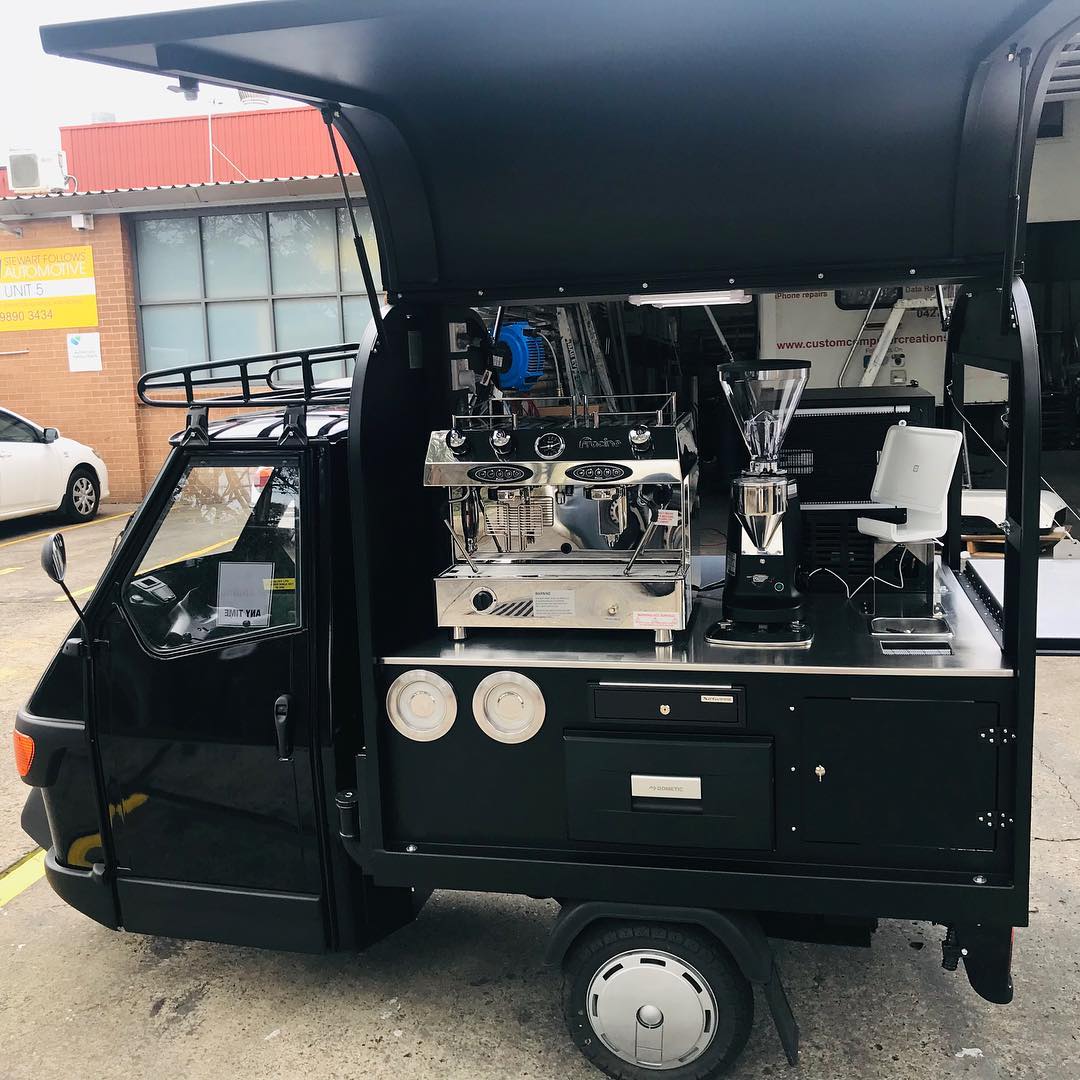
A three-wheeled Piaggio Ape, fitted out as a compact espresso bar with a fold-up canopy and a stainless servery tray. Narrow enough for a laneway or a campus path, small enough to park almost anywhere a car can — with the same machine you'd find in a full-size van.
See the gallery How it's built
Fit-out detail, machine installs and finished handovers — click through the clips in the main window, or pick one from the strip below.
The Mobile Coffee Group
Watch as a story
Tap either side to skip, hold to pause, or expand for a bigger view. Arrow keys work too.
Ape models we fit out
The Piaggio Ape trades payload for footprint. We're checking for three things before anything else: enough tray length for a real espresso set-up, a chassis rated for the finished weight, and a canopy that suits how you'll actually use it.
The tray-back cab chassis is the standard base — narrow enough for laneways and campus paths, with a flat rear tray long enough for a single or twin-group machine plus a drawer fridge.
An Ape's payload is a fraction of a van's. The machine, grinder, till and stock have to be weighed against it up front — this is what decides one group versus two.
A gas-strut canopy over the tray becomes the awning and the signage panel in one — up in seconds at a pop-up, folded flat for the drive there.
Ape panels take a gloss respray as well as they take a wrap — the red classic and the black-and-gold Prosecco Van are both solid paint, USU Grads is a decal wrap over white.
Same tray, same canopy, different fit-out — the Prosecco Van runs four beverage taps instead of a group head. If it pours, we can plumb it.
A bare cab chassis built up from scratch, or an existing Ape stripped back and re-fitted — both end at the same compliance sign-off before it goes to work.
Build your own
The same five decisions as any build, just working with a fraction of the space and payload. On an Ape, the tray length usually settles the machine choice before anything else does.
A stainless-topped tray built onto the rear chassis, a gas-strut canopy that folds up to become the awning, and a servery opening at bar height so hand-off works whether the customer's standing at the tray or queued along the footpath.
Two-group machines are installed, either gas or inverter/battery powered. Paired grinders sit alongside, and the power choice follows the work — gas for long days away from a plug, inverter and battery where a quiet, flueless set-up matters.
A single wash-down basin, and fresh and waste tanks sized for a shorter trading day rather than a full one — an Ape usually does a booked event or a campus shift, not an all-day street pitch, so the tanks are built to match.
A single battery with inverter covers the machine, grinder and till for a typical booking. Where the event has mains power on offer, a shore power lead does the job without touching the onboard battery at all.
The Ape's flat panels take a solid gloss respray as cleanly as a full wrap — deep red on the classic build, black and gold on the Prosecco Van, a black shield decal over white for USU Grads. Same tray and canopy underneath, three completely different finishes.
Your nearest dealer can walk you through tray layouts, machine options and finishes, and what it takes to get one built on your timeline.