SUV fit-outs
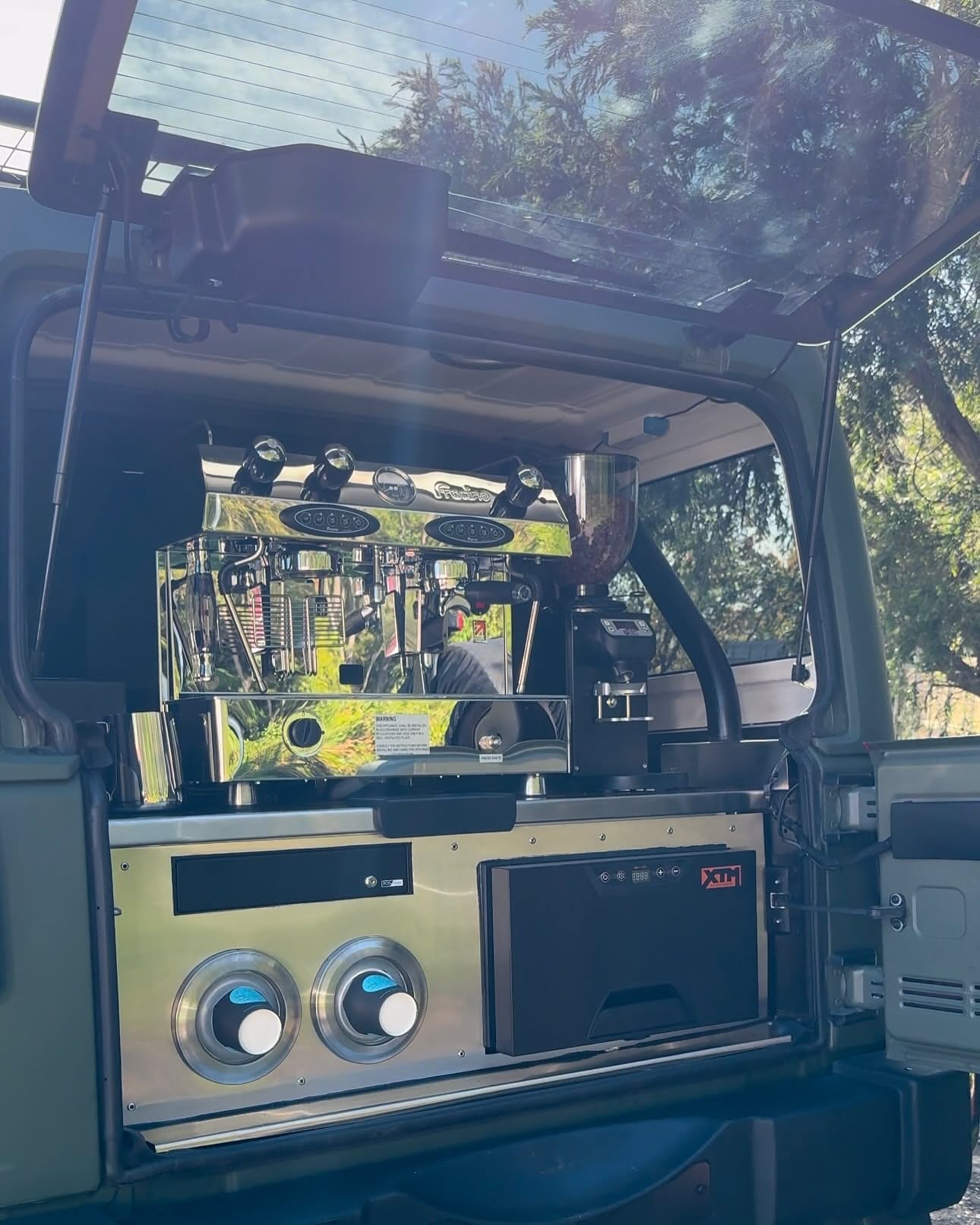
The tailgate is the servery.
A converted SUV, tailgate raised over a fitted bench in the boot — the smallest step up from a hatchback build, in a vehicle that still does the school run on the days it's not trading. No canopy, no tray, just the boot you already have.
See the gallery How it's built
- Tailgate
- Raised over the bench as the awning
- 1
- Group espresso machine, most builds
- Dual-use
- Family SUV on the days it's not trading
Straight from the workshop
A Jeep Wrangler built to serve off the tailgate, and a BMW X5 in Domain livery working the street. Two clips and seven photographs from real builds.
- The brief: red Jeep to army green
- Finished walk-around, sinks to livery
- Jeep Wrangler, olive green
- Serving from the tailgate
- Machine, grinder, cup wells
- Gas locker and shore power
- Set up on the oval
- Domain, on the street
- Serving at an event
- Pajero fit-out, rear hatch
SUVs we fit out
What makes a good SUV base
An SUV trades tray or canopy space for something a ute or van can't offer: it's a normal family vehicle every other day of the week. We're checking three things — boot depth with the seats down, tailgate height when raised, and payload left over once the second row folds flat.
-
Mid-to-large SUVs, seats down
Toyota Prado, Ford Everest, Kia Sorento and similar mid-to-large SUVs give enough boot length with the second row folded to fit a real bench, not just a machine perched on the parcel shelf.
-
Tailgate height when raised
The raised tailgate becomes the awning, so we're checking it lifts high enough to serve under comfortably — some models need a gas-strut upgrade to get the clearance a servery needs.
-
Payload with the fit-out installed
A machine, grinder, fridge and battery all sit behind the rear axle. We check that weight against the SUV's payload and rear axle rating before the bench design is finalised.
-
A vehicle that still does the school run
Unlike a dedicated van or ute, most SUV builds are designed to unbolt or fold away — so the vehicle goes back to family use between bookings rather than sitting idle.
-
Single or two-group machine
Both are offered. A single group and one grinder covers a market stall, a school fete or a small private event; a two-group set-up is fitted where the boot length carries it.
-
New builds and re-fits
A fresh fit-out into an SUV bought for the job, or a bench built into the family car already in the driveway — both end at the same compliance sign-off.
Build your own
Inside an SUV fit-out
The same five decisions as any build, working around one extra constraint: most of it has to come out, or fold away, when the vehicle goes back to family use.
- Layout
-
Bench in the boot, tailgate as the awning
A bench built to sit over the folded second row, with the tailgate raised doing the job a canopy or awning does on a bigger build. Most of the fit-out is designed to lift out or fold flat when the boot goes back to normal use.
- Espresso machines
-
Two group, gas or battery
Two-group machines are installed, either gas or inverter/battery powered. Paired grinders sit alongside, and the power choice follows the work — gas for long days away from a plug, inverter and battery where a quiet, flueless set-up matters.
- Water & waste
-
Council approved tanks, under-bench fridge
Council approved fresh and waste containers under the bench, sized for a single day's trading, plus a drawer fridge for milk.
- Power options
-
Battery bank, sized to one machine
A single battery with inverter runs the machine, grinder and fridge for a booking. Because the SUV keeps driving between trading days, the bank tops back up the same way any dash-cam or fridge system would.
- Wraps & branding
-
Removable signage, not a full respray
Most SUV builds keep the vehicle's own paint and add magnetic or removable signage rather than a wrap — so it reads as a family car again the moment the signage comes off.
Ready to build your SUV?
Your nearest dealer can walk you through bench layouts, machine sizing, and what it takes to get one built into your own SUV.