The Mobile Coffee Group
Watch as a story
Tap either side to skip, hold to pause, or expand for a bigger view. Arrow keys work too.
Walk-in coffee vans
A high-roof van fitted out inside with a full-length bench — walked into, not leaned into. Built for operators doing long days, high volume, and a menu bigger than a single grinder can handle.
See the gallery How it's built
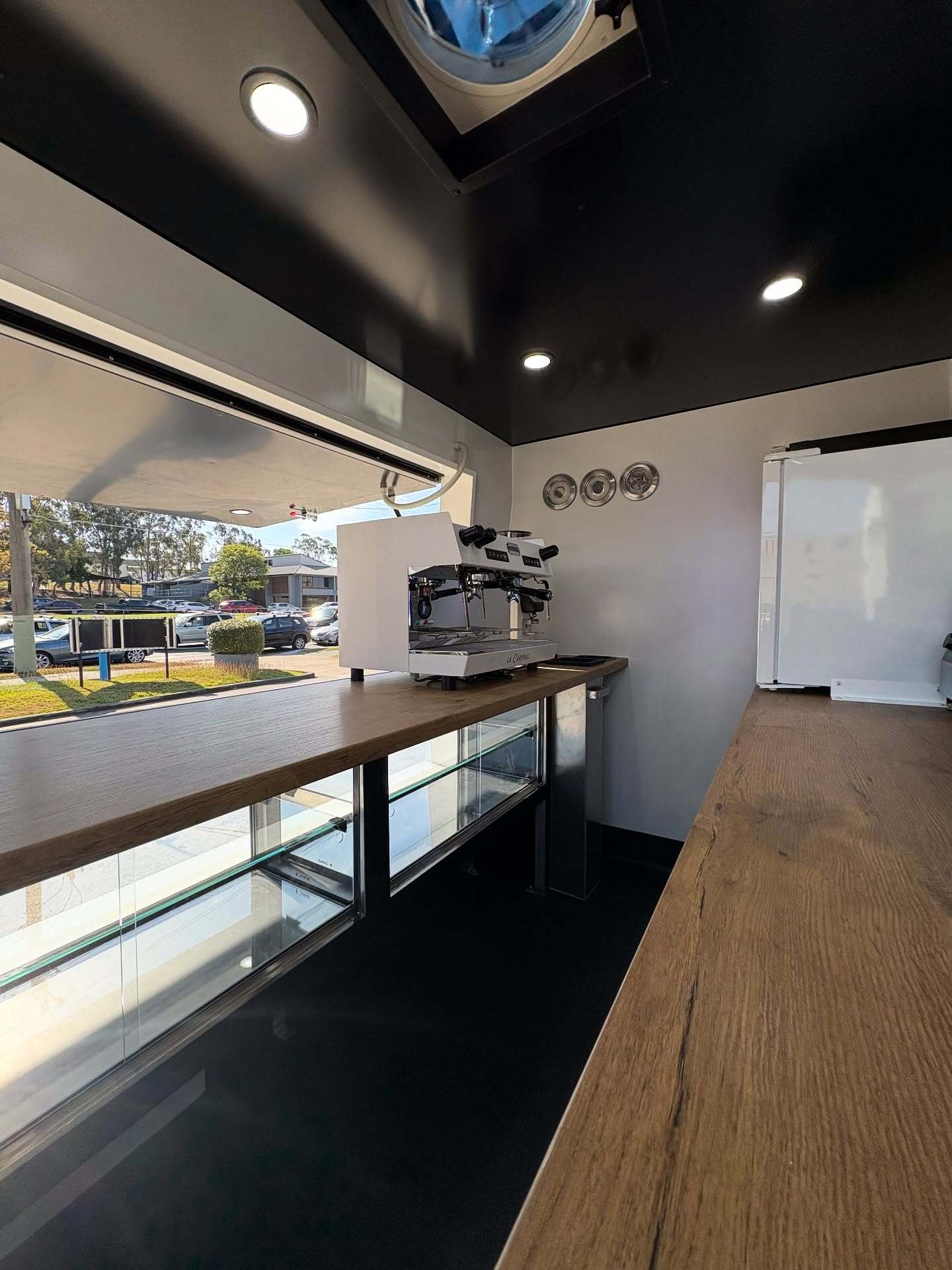
Walk-throughs, fit-out detail and finished handovers — click through the clips in the main window, or pick one from the strip below.
The Mobile Coffee Group
Watch as a story
Tap either side to skip, hold to pause, or expand for a bigger view. Arrow keys work too.
Vans we fit out
Not every van suits a walk-in fit-out. We're looking for three things before anything else: standing headroom, payload for water and battery weight, and a blank panel-van interior to build into.
LDV G10 and Deliver 9, Renault Master, Mercedes Sprinter, Ford Transit and Iveco Daily in high-roof trim all give enough internal height to stand upright the full length of the bench.
Water tanks, batteries, an espresso machine and a loaded bakery display add up fast. We check GVM against the finished build weight before anything gets bolted in, not after.
Unlined, no factory racking, no existing plumbing runs. A clean shell means the cabinetry, wiring and water lines go exactly where the layout needs them.
One awning window down the kerb side for a single-queue setup, or windows on both sides for events and double frontage — the shell needs to support the cut-outs either way.
Brand-new vans built from a bare shell, or an existing van gutted and re-fitted — both routes end at the same standard of finish and the same compliance sign-off.
Seen a shell you like that's not on this list? If it's got the headroom and the payload, we'll quote the fit-out on it.
Build your own
Every build works through the same five decisions, in roughly this order. Change one and it tends to move the others — a dual servery affects the plumbing run, a bigger machine affects the power budget.
A full-length engineered-timber bench down one or both sides, a walk-through aisle for the barista, and the servery window positioned so hand-off happens without a reach. Overhead cabinetry and an awning window above the bench keep cup and syrup stock within arm's reach.
Two-group machines are installed, either gas or inverter/battery powered. Paired grinders sit alongside, and the power choice follows the work — gas for long days away from a plug, inverter and battery where a quiet, flueless set-up matters.
A wash and rinse sink set into the bench, fresh and waste tanks underneath sized for a full trading day, a hot water service, and a dedicated hand-wash point — all specced to council food-safety requirements before the van goes on the road.
A dual-battery or lithium bank with inverter runs the machine, grinder, fridge and lighting through a full trading day without the engine running. A shore power inlet covers events where mains power's on offer, and a generator sits behind that as backup.
Everything above builds the same underlying shell — what changes is the wrap. A bean-pattern wrap, an Indigenous-artwork design for a community enterprise, a full graffiti treatment, or minimal signage on a black base: the fit-out doesn't dictate the finish.
Your nearest dealer can walk you through layouts, machine options and what it takes to get one built on your timeline.